
Analog vs. IP Video Intercoms: Is the Upgrade Worth the Cost?
March 18, 2026 |
By Junaid Farooq
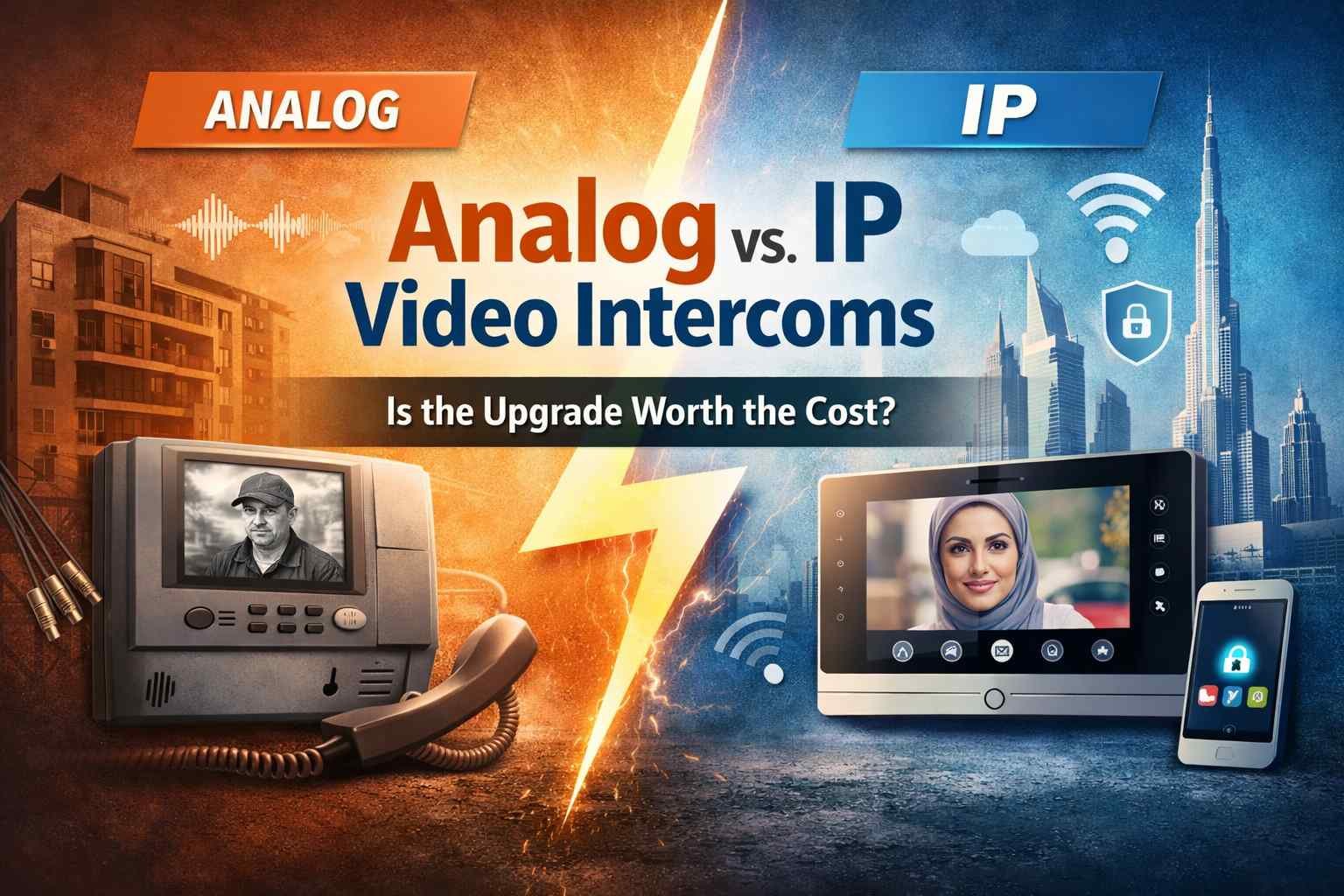
Security expectations in the UAE have changed. From residential towers in Dubai Marina to commercial spaces in Abu Dhabi, property owners now expect more than just basic communication at the door. They want visibility, remote access, and smart integrations. This is where the debate around Analog vs. IP Video Intercoms becomes important.
Choosing the right system directly impacts security, operational efficiency, and long-term costs. The question is simple: is upgrading to IP worth it?
What Is an Analog Video Intercom?
Analog intercom systems are traditional communication systems that transmit audio and video signals through electrical wiring.
They have been used for decades across villas, small buildings, and older infrastructure.
Key Characteristics
• Uses coaxial or multi-wire cabling
• Direct device-to-device communication
• Limited features
• Works independently (no internet required)
Where Analog Still Works
• Small buildings
• Budget-constrained projects
• Legacy infrastructure setups
Analog systems are still relevant because they are simple and affordable. However, their limitations are becoming more noticeable in modern UAE environments.
What Is an IP Video Intercom?
IP (Internet Protocol) video intercom systems operate over a network (LAN or internet). They transmit digital data instead of analog signals.
This allows them to support advanced features and integrations.
Key Characteristics
• Uses Ethernet or Wi-Fi
• Digital signal transmission
• Supports cloud and mobile access
• Integrates with smart systems
IP systems are now widely used in UAE smart buildings, gated communities, and commercial towers.
Analog vs. IP Video Intercom: Core Differences
Here is a clear comparison based on real-world use cases:
| Feature | Analog Intercom | IP Video Intercom |
|---|---|---|
| Initial Cost | Low | Higher |
| Installation | Simple | Requires network setup |
| Video Quality | Low to moderate | HD / 4K |
| Audio Quality | Prone to noise | Clear digital audio |
| Remote Access | Not available | Available via apps |
| Scalability | Limited | Highly scalable |
| Integration | Minimal | Smart system integration |
| Maintenance | Manual | Remote troubleshooting |
| Security | Basic | Encrypted systems |
Key Insight
Analog wins on short-term cost, while IP dominates in long-term value and functionality.
Cost Comparison: Short-Term vs Long-Term
Initial Investment
Analog systems are cheaper upfront. They require less infrastructure and are easier to install.
IP systems, on the other hand, involve:
• Network switches
• PoE infrastructure
• Configuration
This increases initial cost.
Long-Term Cost Analysis
Despite higher upfront costs, IP systems often result in lower total cost of ownership.
Reasons include:
• Fewer hardware components over time
• Lower maintenance costs
• Remote troubleshooting capabilities
Example Scenario (UAE Building)
| Cost Factor | Analog | IP |
|---|---|---|
| Installation | Low | Medium |
| Maintenance (5 years) | High | Low |
| Upgrades | Expensive | Easy |
| Total 5-Year Cost | Medium-High | Medium |
Conclusion: IP becomes more cost-effective over time.
Video and Audio Quality Comparison
This is one of the biggest differentiators.
Analog Limitations
• Lower resolution
• Signal degradation over distance
• Susceptible to interference
IP Advantages
• HD and 4K video support
• Clear digital audio
• Stable performance over networks
In UAE environments especially high-rise buildings clarity matters. Identifying visitors clearly is critical for security.
Smart Features: Where IP Completely Wins
IP intercom systems are not just communication tools they are part of a larger smart ecosystem.
Features Only IP Offers
• Mobile app access
• Remote door unlocking
• Video recording & playback
• Facial recognition (in advanced models)
• Cloud storage
• Multi-location control
These features are enabled because IP systems operate over networks and support higher data bandwidth.
Integration with Smart Buildings (Critical in UAE)
The UAE is heavily invested in smart city initiatives like:
• Dubai Smart City
• Abu Dhabi Vision 2030
IP intercom systems integrate with:
• CCTV systems
• Access control systems
• Smart locks
• Building management systems
This creates a unified security ecosystem.
Analog systems cannot match this level of integration.
Scalability and Future-Proofing
Analog Systems
• Require rewiring for expansion
• Limited device support
IP Systems
• Add devices easily via network
• No major rewiring required
• Scales from villas to skyscrapers
IP systems are designed to grow with your property.
Security Considerations
Analog Security
• Not internet-based
• Less vulnerable to cyber attacks
• Limited functionality
IP Security
• Potential cyber risks
• Protected through encryption and secure protocols
Modern IP systems include:
• End-to-end encryption
• User authentication
• Secure cloud storage
In UAE commercial projects, cybersecurity standards are already being enforced making IP systems a safe choice when properly configured.
Installation Complexity
Analog
• Straightforward wiring
• Faster deployment
• Ideal for small setups
IP
• Requires IT/network setup
• Needs configuration
• May require professional integration
However, technologies like Power over Ethernet (PoE) reduce complexity by using a single cable for power and data.
UAE-Specific Use Cases
When Analog Makes Sense
• Small villas
• Budget-limited projects
• Retrofit projects with existing wiring
When IP Is the Better Choice
• Smart homes in Dubai
• High-rise apartments
• Commercial buildings
• Gated communities
• Office complexes
In most UAE developments, IP systems are becoming the standard.
Market Trend and Industry Growth
The intercom and access control industry is growing rapidly.
• Global intercom market valued at $33.4 billion (2025)
• Strong growth driven by smart buildings and IoT
• UAE leading adoption in Middle East smart infrastructure
This indicates a clear shift toward IP-based systems.
Pros and Cons Summary
Analog Intercom
Pros
• Low upfront cost
• Simple installation
• Reliable for basic use
Cons
• Limited features
• Poor scalability
• Lower video quality
IP Video Intercom
Pros
• High-quality video and audio
• Remote access
• Smart integrations
• Scalable and future-proof
Cons
• Higher initial cost
• Requires network setup
• Needs cybersecurity management
Is the Upgrade Worth It?
Short Answer
Yes for most UAE properties.
Real Decision Framework
Upgrade to IP if:
• You need remote access
• You plan to scale
• You want smart integrations
• You prioritize security and monitoring
Stay with analog if:
• Budget is extremely limited
• You only need basic communication
• No expansion is planned
Final Verdict
The shift from analog to IP is not just a technology upgrade it is a strategic investment.
Analog systems solve basic communication needs.
IP systems solve security, convenience, and scalability.
In a region like the UAE where smart infrastructure is rapidly expanding IP video intercom systems are becoming the standard rather than the exception.
The upfront cost difference exists.
But the long-term benefits clearly outweigh it.
FAQs
Can I upgrade from analog to IP without replacing everything?
Yes. Hybrid systems allow gradual upgrades using existing wiring.
Do IP intercoms require internet?
They can work on local networks, but internet enables remote access.
Are IP systems secure?
Yes, when configured with encryption and proper access control.
What is the lifespan of these systems?
Both systems can last 7–10 years, but IP systems stay relevant longer due to updates.

Junaid Farooq
A technology specialist with a focus on IT infrastructure and security solutions. Shares expert advice on topics like access control, CCTV, and smart solutions to help businesses across the UAE build smarter, more secure systems.