
What is CCTV? Meaning, Full Form, and How It Works
June 22, 2026 |
By Junaid Farooq
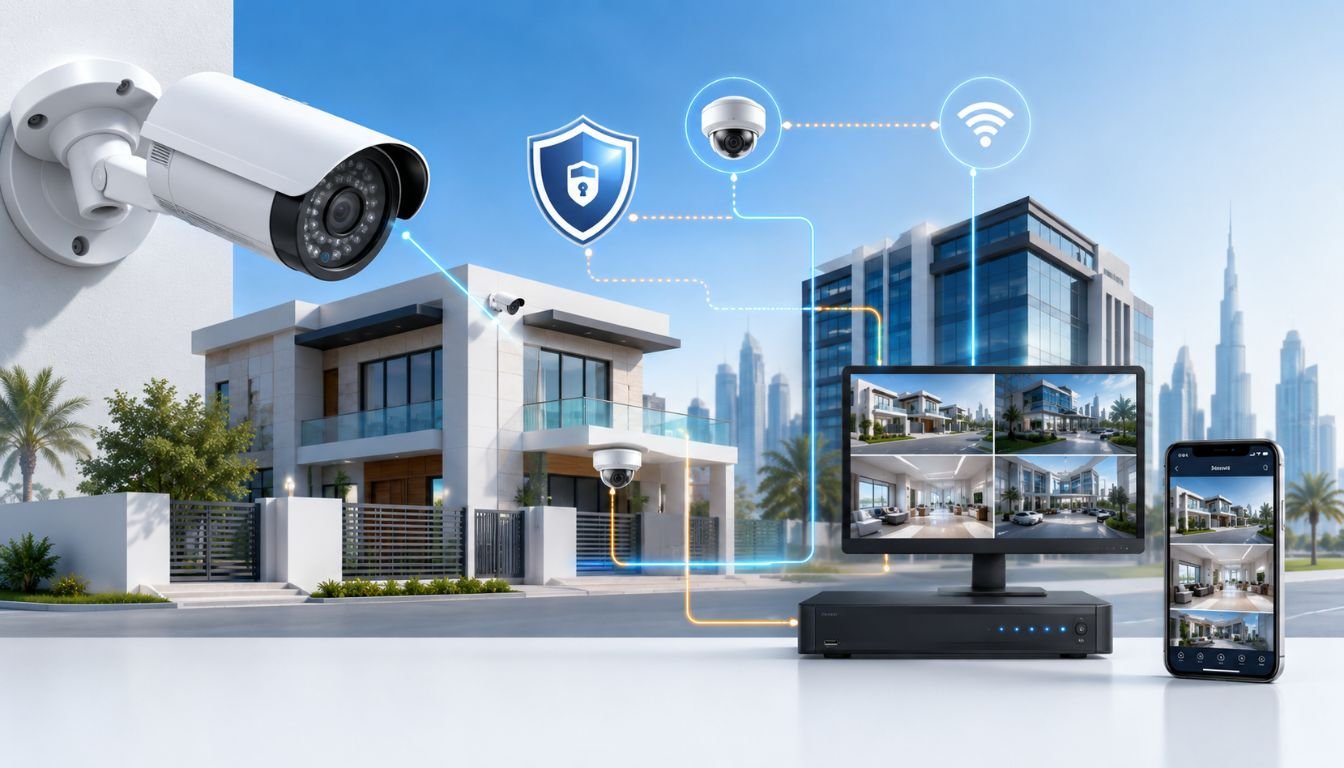
CCTV stands for Closed-Circuit Television, a video surveillance system where cameras send footage to a private, limited set of monitors or recorders instead of broadcasting it publicly like regular TV. If you’re wondering what is CCTV, it is simply a security camera system designed to monitor, record, and help protect a specific area. In simple terms, CCTV is the camera and recording system you see in homes, offices, shops, and streets across Dubai that keeps a private, continuous record of what happens in a particular location.
If you’ve ever wondered what those small cameras near your building entrance, parking lot, or office reception actually are, you’ve already seen CCTV in action. This guide breaks down what is CCTV?, where the term comes from, how the system actually works behind the scenes, and where it’s used without the technical jargon.
What Does CCTV Stand For?
CCTV Full Form Explained
CCTV full form: Closed-Circuit Television.
Let’s break that down into two simple parts:
- Closed-circuit means the video signal is sent only to specific, private screens or recorders not transmitted publicly over the airwaves.
- Television simply refers to the transmission of moving video images.
So when you put the two together, CCTV literally means a television setup that operates on a closed, private loop rather than a public broadcast.
Where the Term Came From
The phrase “closed-circuit television” dates back to the early days of video technology, when “television” referred to any system that transmitted live video images, not just the TV channels we watch at home. Engineers needed a way to describe systems where the camera’s signal stayed within a private network, visible only to the person or organization monitoring it.
That distinction still matters today. Your CCTV footage at home isn’t visible to your neighbors, your internet provider, or the public it’s “closed” to your own recorder, app, or monitoring service (unless you choose to share it).
What is CCTV? A Simple Definition
CCTV is a system of video cameras connected to a private recording device or network, used to monitor and record activity in a specific location for security, safety, or monitoring purposes.
That’s the whole idea. A camera captures video, that video travels through a cable or network connection, and it lands somewhere in a recorder, a hard drive, or a cloud storage account where it can be watched live or reviewed later.
Closed-Circuit vs Open Broadcast
It helps to compare CCTV to something everyone already understands: regular television broadcasting.
| CCTV (Closed-Circuit) | Open Broadcast TV | |
| Who can view it | Only authorized people with access | Anyone with a TV or receiver |
| Signal type | Private, limited connection | Public broadcast signal |
| Purpose | Security, monitoring, recording | Entertainment, news, public information |
| Typical use | Homes, offices, streets, warehouses | TV channels, public broadcasts |
This is the key difference that gives CCTV its name and its purpose. It was built from the ground up to be private and security-focused, not for public viewing.
How Does a CCTV Camera System Work?
Most people assume CCTV is complicated, but the underlying idea is straightforward once you see the basic flow.
Camera → Recorder → Monitor The Basic Flow
Every CCTV system, no matter how advanced, follows the same three-step process:
- Camera captures video: The camera lens picks up live footage of whatever it’s pointed at, whether that’s a front gate, a retail counter, or a warehouse floor.
- Footage travels to a recorder: The video signal is sent through a cable (or WiFi, for wireless systems) to a recording device, usually a DVR or NVR.
- Footage is stored and viewable: The recorder saves the video to a hard drive or cloud storage, and you can view it live or play back recordings through a monitor, computer, or mobile app.
That’s it. Everything else motion alerts, night vision, AI detection, mobile notifications is built on top of this basic three-step foundation.
Analog vs IP (Digital) CCTV Systems
Not all CCTV systems work exactly the same way. There are two main types you’ll come across when researching installation in Dubai:
| Feature | Analog CCTV (DVR-based) | IP CCTV (NVR-based) |
| Video quality | Standard HD | High-definition to 4K |
| Cabling | Coaxial cable | Network (Cat6) cable |
| Smart features | Limited | AI detection, mobile alerts, facial recognition |
| Cost | Generally lower | Slightly higher, but more future-ready |
| Best for | Smaller budgets, simple setups | Homes and businesses wanting smart monitoring |
Most new installations in Dubai now use IP (digital) cameras because they offer sharper footage, easier remote viewing, and better long-term flexibility but analog systems are still around, especially in older buildings.
Beyond choosing between analog and IP systems, it’s important to understand the different types of CCTV cameras available, including dome, bullet, PTZ, turret, and wireless models, as each serves a different security purpose.
What is CCTV Used For?
CCTV isn’t just for big businesses or government buildings. It’s become a normal part of everyday security across homes, offices, and public spaces in the UAE.
Homes & Villas
For villa owners and homeowners, CCTV is mainly used to:
- Monitor the front gate, driveway, and entrances
- Keep an eye on deliveries and visitors
- Deter burglars and unwanted intruders
- Check in on the property remotely while traveling
Choosing the right camera setup is just as important as deciding to install one. See our guide to the best CCTV systems for villas in Dubai to compare options for entrances, driveways, gardens, and indoor monitoring.
Offices & Retail
Businesses rely on CCTV for more than just theft prevention. Common uses include:
- Monitoring entry and exit points
- Reducing internal theft at cash counters and stockrooms
- Reviewing incidents for insurance or HR purposes
- Supporting staff safety and customer dispute resolution
Public & Government Spaces in the UAE
Across Dubai and the wider UAE, CCTV plays a major role in public safety. You’ll typically find it in:
- Government buildings and public facilities
- Roads and traffic monitoring systems
- Shopping malls and parking structures
- Residential compounds and gated communities
Key Components of a CCTV System
A working CCTV setup is made up of a few essential parts that work together:
| Component | What It Does |
| Camera | Captures the live video image |
| DVR/NVR | Records and stores footage from the cameras |
| Storage (HDD) | Holds recorded footage, usually for days or weeks |
| Monitor or App | Lets you view live footage or recorded playback |
| Cabling/Network | Connects the cameras to the recorder and network |
Depending on the system, you might also have extras like motion sensors, night vision modules, or a mobile app for remote access but these five components are the foundation of every CCTV setup, from a single home camera to a 50-camera commercial network.
Is CCTV Legal in Dubai?
Yes, CCTV is legal in Dubai for both homes and businesses, but many commercial properties including offices, retail stores, warehouses, and residential compounds are expected to follow guidelines set by the Security Industry Regulatory Agency (SIRA). These cover things like camera placement, footage retention periods, and system registration.
If you’re installing CCTV for a business in Dubai, it’s worth understanding these requirements before setup. For a full breakdown of what’s required, see our guide on SIRA CCTV requirements in Dubai.
Frequently Asked Questions
What does CCTV stand for?
CCTV stands for Closed-Circuit Television, a private video monitoring system where footage is only visible to authorized viewers, not broadcast publicly.
What is the difference between CCTV and a regular camera?
A regular camera typically captures photos or short videos for personal use, while CCTV is a continuous, connected system designed for ongoing monitoring and recording, usually linked to a recorder or storage device.
Is CCTV the same as a security camera?
Yes, in everyday use, “CCTV” and “security camera” mean the same thing. CCTV is the broader system (camera + recorder + storage), while “security camera” usually refers to the camera itself.
Do I need a license to install CCTV in Dubai?
Homeowners generally don’t need a license for personal CCTV use, but many commercial properties in Dubai must register their systems and follow SIRA compliance rules.
How long does CCTV footage get stored?
This depends on your storage capacity and settings, but most systems retain footage anywhere from 7 to 30 days. Many businesses in Dubai are required to keep footage for a minimum period under SIRA guidelines.
Thinking About Installing CCTV in Dubai?
Now that you know what is CCTV and how it works, the next step is choosing the right cameras and system for your home or business. Budget is another important consideration. Before planning your project, review the latest CCTV installation cost in Dubai to understand how camera quantity, storage requirements, and property size affect pricing. Wiznet provides professional CCTV installation in Dubai, smart surveillance systems, and SIRA-aware setup for villas, offices, warehouses, retail stores, and commercial properties across Dubai and the UAE.
Request a free site survey today and get a customized security recommendation built around your property.

Junaid Farooq
A technology specialist with a focus on IT infrastructure and security solutions. Shares expert advice on topics like access control, CCTV, and smart solutions to help businesses across the UAE build smarter, more secure systems.
