
Biometric Door Access Control Systems: How Dubai Offices Are Upgrading in 2026
December 10, 2025 |
By Junaid Farooq
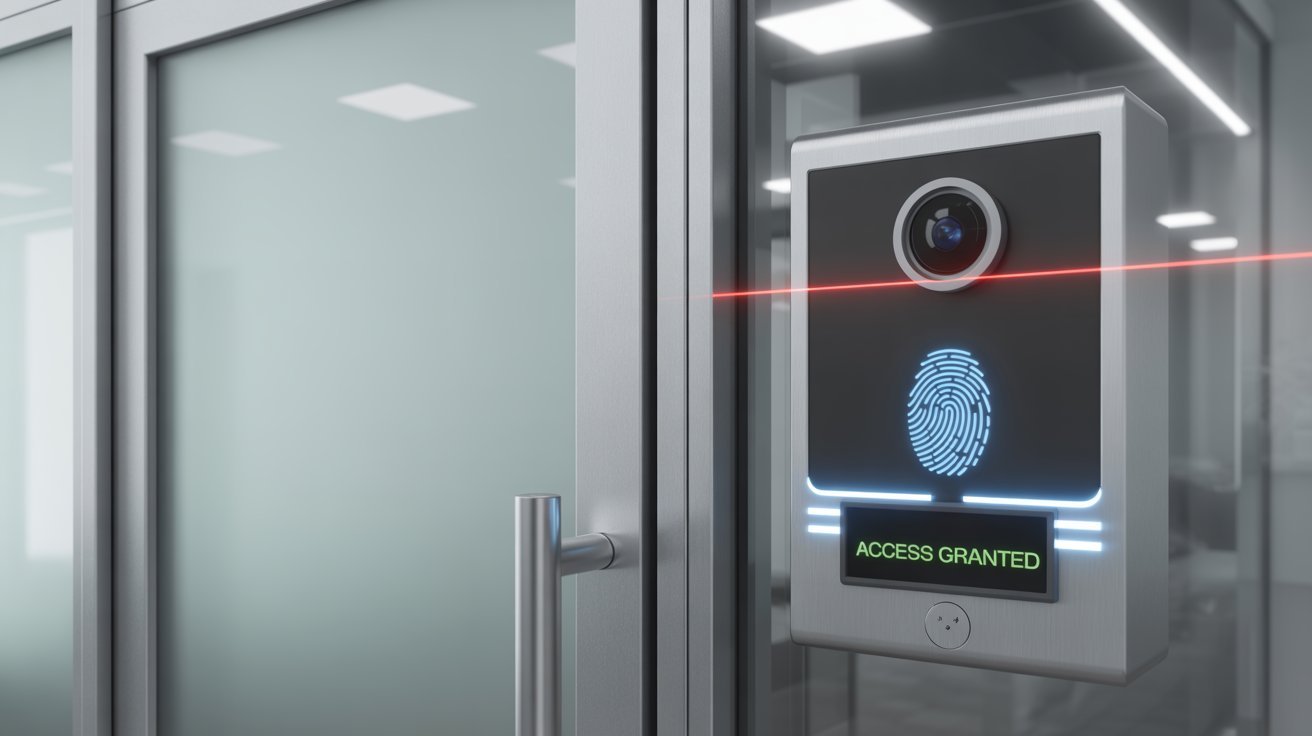
Dubai continues cementing its position as a global smart city leader, with office buildings rapidly transitioning from traditional key-card systems to advanced biometric door access control solutions. By 2026, approximately 78% of Grade A commercial buildings in Dubai will have either implemented or are actively upgrading to biometric security systems.
This shift reflects broader UAE Vision 2031 objectives focusing on technological advancement, enhanced security infrastructure, and creating seamless workplace experiences. Whether you’re a facility manager, business owner, or security professional, understanding these developments is essential for making informed decisions about your office security infrastructure.
What Are Biometric Door Access Control Systems?
Biometric door access control systems authenticate individuals based on unique physiological or behavioral characteristics rather than physical credentials like keys or access cards. These systems capture, analyze, and verify biological data to grant or deny entry.
Core Components of Modern Biometric Systems
| Component | Function | 2026 Technology Standard |
| Biometric Reader | Captures biological data | Multi-modal sensors |
| Control Panel | Processes authentication requests | AI-powered processors |
| Database Server | Stores encrypted templates | Cloud/hybrid storage |
| Door Hardware | Physical access mechanism | Electromagnetic locks |
| Management Software | System administration | Mobile-enabled platforms |
| Integration Module | Connects with building systems | API-driven architecture |
Types of Biometric Technologies Dominating Dubai Offices in 2026
1. Facial Recognition Systems
Facial recognition leads adoption rates in Dubai, with 62% of new installations featuring this technology. The contactless nature, accelerated post-pandemic, makes it particularly appealing for high-traffic corporate environments.
Key Features:
- 3D mapping with liveness detection
- Mask-compatible recognition
- Processing speeds under 0.3 seconds
- 99.7% accuracy rates
2. Fingerprint Biometrics
Despite newer technologies emerging, fingerprint systems remain a cost-effective solution for small-to-medium enterprises. Modern capacitive sensors offer improved hygiene through antimicrobial coatings.
3. Iris Recognition
Premium office towers, particularly in DIFC and Downtown Dubai, increasingly deploy iris recognition for executive floors and high-security zones. These systems offer 99.99% accuracy with minimal false acceptance rates.
4. Palm Vein Recognition
Contactless palm vein technology has seen 340% growth in Dubai installations since 2024. This technology reads vein patterns beneath the skin, offering enhanced security while addressing hygiene concerns.
5. Multi-Modal Biometric Systems
The most significant trend involves combining multiple biometric factors. Multi-modal systems reduce false rejection rates while strengthening overall security posture.
Why Dubai Offices Are Upgrading: Key Drivers
Regulatory Compliance Requirements
The UAE’s Personal Data Protection Law (PDPL), fully enforced since 2024, mandates strict controls over facility access and data protection. Biometric systems provide detailed audit trails essential for compliance.
Smart Building Integration
Dubai’s building codes increasingly require smart infrastructure compatibility. Modern biometric systems integrate with:
- Building Management Systems (BMS)
- HVAC optimization
- Lighting controls
- Elevator destination dispatch
- Visitor management platforms
Post-Pandemic Workplace Evolution
Hybrid work models demand flexible, contactless access solutions. Traditional cards create logistical challenges when employees work irregular schedules. Biometric systems enable seamless access without physical credential management.
Enhanced Threat Detection
Integration with AI-powered surveillance enables biometric systems to identify unauthorized individuals, detect tailgating, and alert security teams in real-time.
Dubai Biometric Access Control Market: 2026 Statistics
Dubai Office Biometric Adoption by Sector:
Financial Services ████████████████████████ 89%
Technology Companies ██████████████████████ 82%
Healthcare Facilities ████████████████████ 76%
Legal Firms ████████████████████ 74%
Government Offices ███████████████████ 71%
Retail/Hospitality ████████████████ 58%
Manufacturing ██████████████ 52%
Market Insights:
- Total market value: AED 892 million (projected 2026)
- Annual growth rate: 18.4% CAGR
- Average implementation cost reduction: 23% since 2024
- Cloud-based system adoption: 67% of new installations
Benefits of Biometric Access Control for Dubai Businesses
Operational Advantages
Elimination of Credential Costs:
Traditional access cards cost AED 15-50 each, requiring replacement for lost, damaged, or expired credentials. Biometric systems eliminate these recurring expenses.
Reduced Administrative Burden:
HR and facility teams report a 40% reduction in access management time after biometric implementation.
Security Enhancements
Non-Transferable Authentication:
Unlike cards or PINs, biometric credentials cannot be shared, stolen, or duplicated. This prevents unauthorized access through borrowed credentials.
Real-Time Monitoring:
Advanced systems provide instant visibility into building occupancy, enabling emergency response optimization and capacity management.
Employee Experience
Faster Entry Processing:
Modern systems achieve sub-second authentication, eliminating entry bottlenecks during peak hours.
Reduced Friction:
Employees no longer worry about forgetting access cards, improving their daily workplace experience.
Implementation Costs: What Dubai Businesses Should Expect
Initial Investment Breakdown
| System Type | Per-Door Cost (AED) | Installation | Annual Maintenance |
| Basic Fingerprint | 2,500 – 4,000 | 800 – 1,200 | 500 – 800 |
| Facial Recognition | 5,500 – 12,000 | 1,500 – 2,500 | 1,200 – 2,000 |
| Iris Recognition | 15,000 – 28,000 | 2,500 – 4,000 | 2,500 – 4,000 |
| Multi-Modal | 18,000 – 35,000 | 3,500 – 6,000 | 3,000 – 5,500 |
| Palm Vein | 8,000 – 15,000 | 1,800 – 3,000 | 1,500 – 2,500 |
Prices based on Dubai market averages, Q1 2026
ROI Considerations
Most Dubai businesses achieve ROI within 18-24 months through:
- Eliminated credential replacement costs
- Reduced security personnel requirements
- Lower insurance premiums
- Decreased administrative overhead
- Prevention of security incidents
Compliance and Privacy: UAE Regulatory Framework
Data Protection Requirements
Biometric data falls under the “special category” personal data requiring enhanced protection:
- Explicit Consent: Employees must provide documented consent for biometric data collection
- Purpose Limitation: Data used exclusively for stated access control purposes
- Data Minimization: Collection limited to necessary biometric points
- Storage Restrictions: Encrypted storage with defined retention periods
- Transfer Controls: Restrictions on cross-border data movement
SIRA Approval Requirements
Dubai’s Security Industry Regulatory Agency (SIRA) mandates:
- System registration before installation
- Approved vendor selection
- Regular compliance audits
- Incident reporting protocols
Top Features Dubai Businesses Should Prioritize
Essential Capabilities Checklist
Security Features:
- ✅ Liveness detection (anti-spoofing)
- ✅ Encrypted template storage
- ✅ Multi-factor authentication option
- ✅ Tamper detection alerts
- ✅ Backup authentication methods
Integration Requirements:
- ✅ Open API architecture
- ✅ BMS compatibility
- ✅ HR system integration
- ✅ Visitor management connection
- ✅ Mobile app administration
Operational Considerations:
- ✅ Offline operation capability
- ✅ Scalability for growth
- ✅ Arabic/English interface
- ✅ 24/7 local support availability
- ✅ SLA-backed maintenance
Implementation Best Practices
Phase 1: Assessment and Planning
- Conduct a comprehensive security audit
- Map all entry points and access levels
- Evaluate existing infrastructure compatibility
- Define user categories and permissions
Phase 2: Vendor Selection
- Request demonstrations from SIRA-approved providers
- Verify local support capabilities
- Check reference installations in similar facilities
- Negotiate SLA terms and response times
Phase 3: Deployment
- Begin with pilot area implementation
- Train security and administrative personnel
- Communicate changes to all employees
- Collect feedback and optimize settings
Phase 4: Optimization
- Monitor system performance metrics
- Regularly update firmware and software
- Conduct quarterly access rights reviews
- Plan for technology refresh cycles
Future Trends: What’s Next for Dubai Office Security
Emerging Technologies (2026-2028)
Behavioral Biometrics:
Systems analyzing walking gait, typing patterns, and other behavioral characteristics will add additional layers of continuous authentication.
Blockchain-Secured Credentials:
Decentralized identity verification offering enhanced privacy and cross-building credential portability.
AI-Predictive Security:
Machine learning algorithms predict potential security threats before incidents occur.
Seamless Building Entry:
Fully automated access without any user interaction is recognized as individuals approach entry points.
Conclusion: Making the Right Investment Decision
Dubai’s commercial real estate market increasingly views advanced biometric access control as standard infrastructure rather than an optional enhancement. Buildings without modern security systems face competitive disadvantages in attracting premium tenants.
For businesses evaluating upgrades, prioritizing systems with strong integration capabilities, SIRA compliance, and local support infrastructure ensures long-term value. The initial investment, while significant, delivers measurable returns through operational efficiency, enhanced security, and improved employee experience.
Ready to upgrade your Dubai office security? Start by scheduling consultations with multiple SIRA-approved vendors, requesting site assessments, and developing phased implementation plans aligned with your business operations and budget.
FAQs:
What types of biometric access control systems are Dubai offices adopting in 2026?
Dubai offices are primarily adopting facial recognition, fingerprint scanners, iris recognition, and multi-modal biometric systems. Touchless facial recognition is becoming most popular in Business Bay, DIFC, and Dubai Marina corporate offices.
Why are Dubai businesses upgrading to biometric door access systems?
Dubai businesses are upgrading for enhanced security, compliance with UAE smart city initiatives, and touchless entry preferences. These systems also provide accurate attendance tracking integrated with HR departments.
Are biometric access systems in Dubai compliant with UAE data protection laws?
Yes, modern biometric systems comply with UAE Federal Data Protection Law and DIFC regulations. Reputable vendors ensure proper data encryption, secure storage, and transparent employee consent mechanisms.
What is the average cost of installing biometric access control in Dubai offices?
Installation costs typically range from AED 2,000 to AED 15,000 per door. Pricing depends on biometric technology type, number of access points, and integration requirements.
Can biometric systems integrate with existing office security infrastructure?
Yes, modern biometric systems integrate seamlessly with CCTV, visitor management software, HR systems, and smart building automation. This creates a unified security ecosystem without replacing existing infrastructure.

Junaid Farooq
A technology specialist with a focus on IT infrastructure and security solutions. Shares expert advice on topics like access control, CCTV, and smart solutions to help businesses across the UAE build smarter, more secure systems.