
How CCTV, Access Control & Intruder Alarms Work Together in Modern Dubai Workspaces
December 29, 2025 |
By Junaid Farooq
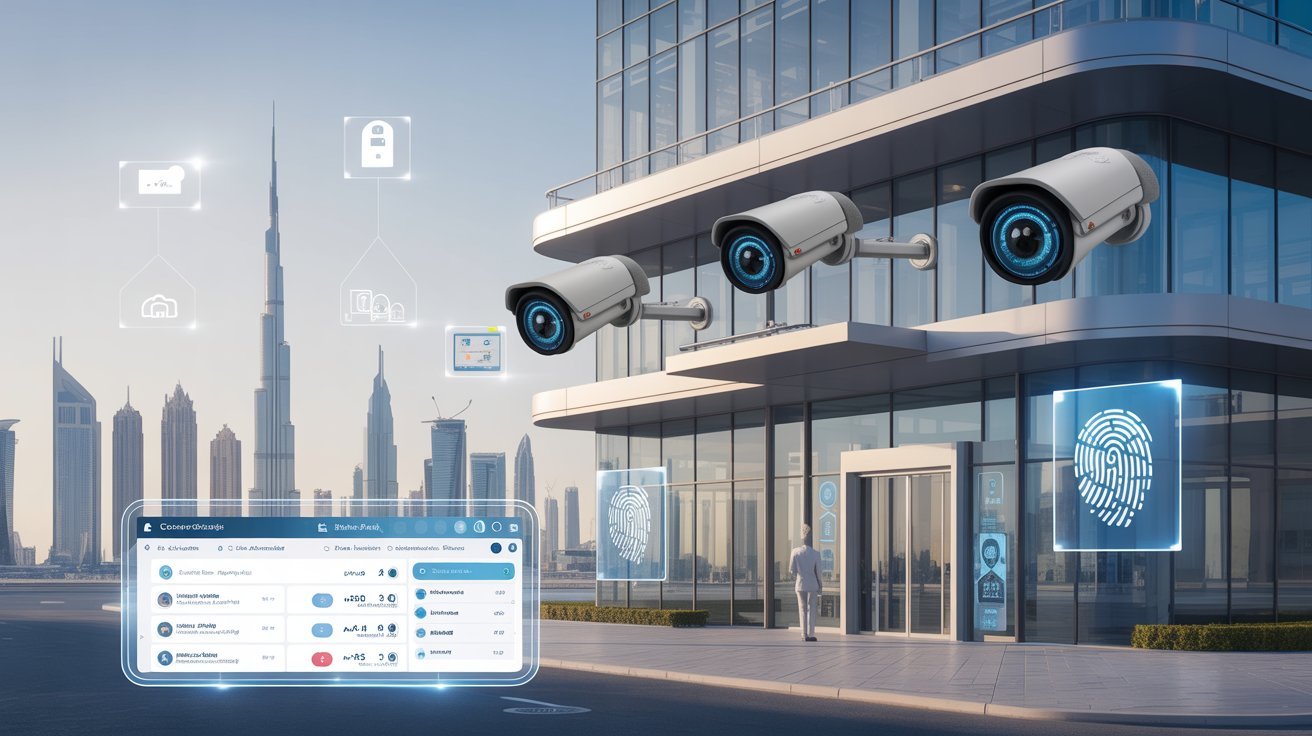
Dubai’s commercial landscape continues evolving rapidly, with businesses increasingly recognizing that standalone security measures no longer suffice. The integration of CCTV surveillance, access control systems, and intruder alarms creates a comprehensive security ecosystem that protects assets, employees, and sensitive data.
According to the Dubai Security Industry Regulatory Agency (SIRA), registered security system installations increased by 34% between 2021 and 2023, reflecting growing awareness among UAE businesses about integrated security solutions.
Understanding the Three Pillars of Workspace Security
1. CCTV Surveillance Systems
Modern CCTV systems in Dubai workspaces extend far beyond simple video recording. Today’s solutions incorporate:
- AI-powered analytics for facial recognition and behavior detection
- 4K/8K resolution cameras for crystal-clear footage
- Cloud storage integration for remote access and backup
- Night vision and thermal imaging capabilities
- Pan-Tilt-Zoom (PTZ) functionality for comprehensive coverage
Dubai Specification: SIRA mandates that all commercial CCTV installations must meet specific resolution standards, with a minimum of 2MP cameras for general surveillance and 4MP for critical areas, such as cash counters and server rooms.
2. Access Control Systems
Access control systems manage who enters specific areas within your workspace. Common technologies include:
| Access Type | Technology | Best Use Case | Security Level |
| Card-Based | RFID/Proximity | General office areas | Medium |
| Biometric | Fingerprint/Facial | Server rooms, executive floors | High |
| Mobile | Smartphone apps | Modern flexible workspaces | Medium-High |
| PIN-Based | Keypad entry | Storage areas | Low-Medium |
| Multi-Factor | Combined methods | Financial institutions, data centers | Very High |
3. Intruder Alarm Systems
Intruder alarms form the reactive layer of security infrastructure:
- Perimeter protection using motion sensors and beam detectors
- Door/window contacts for entry point monitoring
- Glass break detectors for vulnerable access points
- Vibration sensors for vault and safe protection
- Panic buttons for emergencies
How These Systems Work Together: The Integration Framework
Unified Security Management
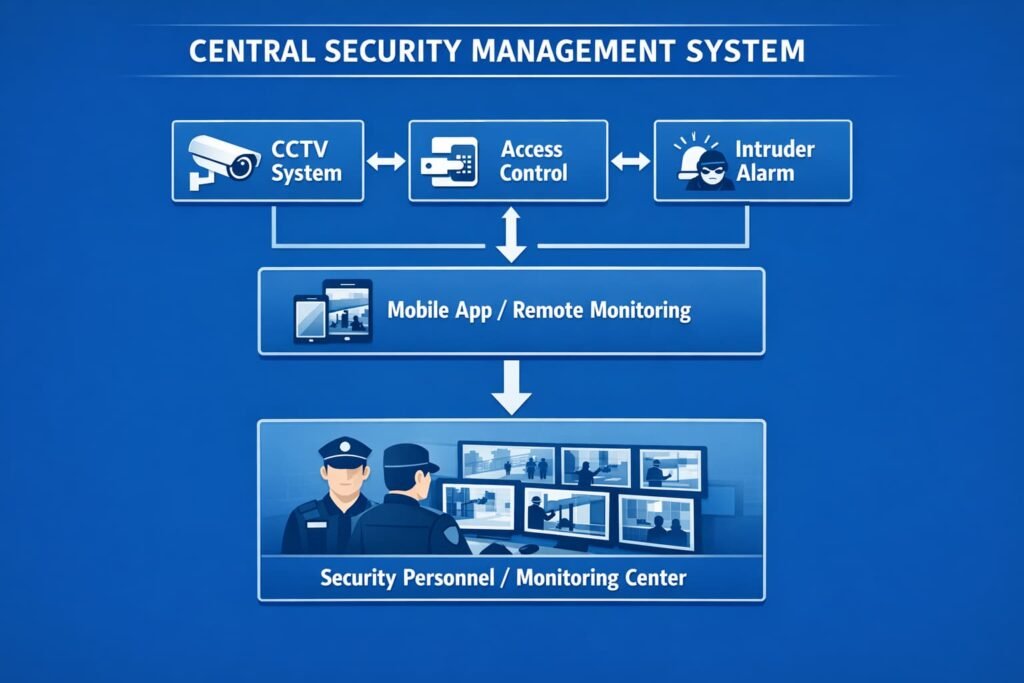
When integrated properly, these three systems communicate through a centralized management platform, creating automated responses that significantly enhance protection.
Example Scenario:
- An unauthorized person attempts entry using a stolen access card after hours
- The access control system denies entry and triggers an alert
- CCTV cameras automatically focus on the location and begin recording
- The intruder alarm system activates perimeter sensors
- Security personnel receive instant mobile notifications
- Video footage is automatically bookmarked for review
Integration Architecture
Key Benefits for Dubai Businesses
Operational Efficiency Gains
Integrated systems deliver measurable improvements across multiple metrics:
| Benefit Area | Standalone Systems | Integrated Systems | Improvement |
| Incident Response Time | 8-12 minutes | 2-4 minutes | 66% faster |
| False Alarm Rate | 15-20% | 3-5% | 75% reduction |
| Security Staff Required | 5-7 per shift | 2-3 per shift | 57% reduction |
| Investigation Time | 4-6 hours | 30-60 minutes | 85% faster |
| Compliance Documentation | Manual | Automated | 90% time saved |
Cost-Benefit Analysis
A 2023 study by the UAE Security Association revealed that Dubai businesses implementing integrated security systems experienced:
- 43% reduction in security-related incidents within the first year
- Average ROI of 156% over three years
- Insurance premium reductions of 15-25% from major UAE insurers
- Employee productivity increased by 12% due to enhanced safety perception
SIRA Compliance Requirements for Dubai Workspaces
The Security Industry Regulatory Agency mandates specific requirements for commercial security installations:
Mandatory Compliance Elements
- Licensed Installation: Only SIRA-approved contractors can install commercial security systems
- System Registration: All CCTV and access control systems must be registered with SIRA
- Data Retention: Minimum 30-day video storage for commercial properties
- Privacy Compliance: Camera placement must respect privacy regulations
- Annual Inspection: Mandatory system inspections by certified technicians
- Monitoring Requirements: High-risk premises require 24/7 monitoring connections
Penalties for Non-Compliance
| Violation Type | First Offense (AED) | Repeat Offense (AED) |
| Unregistered System | 5,000 – 10,000 | 20,000 – 50,000 |
| Unlicensed Installer | 10,000 – 25,000 | 50,000 – 100,000 |
| Inadequate Storage | 3,000 – 8,000 | 15,000 – 30,000 |
| Privacy Violations | 10,000 – 50,000 | 100,000+ |
Industry-Specific Applications in Dubai
Corporate Offices (DIFC, Business Bay)
- Visitor management integration with access control
- Executive floor biometric authentication
- Meeting room occupancy monitoring via CCTV analytics
- After-hours intrusion detection with instant executive alerts
Retail Spaces (Dubai Mall, Mall of Emirates)
- Customer behavior analytics through CCTV
- Staff access zones with time-based restrictions
- Cash handling area surveillance with alarm triggers
- Integration with POS systems for transaction verification
Industrial Facilities (Jebel Ali, DIP)
- Perimeter protection with thermal cameras
- Vehicle access control with ANPR (Automatic Number Plate Recognition)
- Hazardous zone entry restrictions
- Emergency evacuation system integration
Healthcare Facilities
- Patient area privacy-compliant monitoring
- Medication storage access logging
- Emergency room panic button integration
- Visitor tracking and restricted area protection
Implementation Best Practices
Phase 1: Assessment and Planning (2-4 Weeks)
- Conduct comprehensive site security audit
- Identify critical assets and high-risk areas
- Determine integration requirements
- Establish budget parameters (typically AED 75,000-500,000 for mid-sized offices)
Phase 2: System Design (2-3 Weeks)
- Create detailed camera placement maps
- Design access control zone hierarchy
- Plan alarm sensor distribution
- Select compatible hardware and software platforms
Phase 3: Installation and Integration (4-8 Weeks)
- Install hardware components
- Configure network infrastructure
- Integrate all systems through central platform
- Establish monitoring protocols
Phase 4: Testing and Training (1-2 Weeks)
- Conduct comprehensive system testing
- Train security personnel
- Create standard operating procedures
- Establish incident response protocols
Emerging Technologies Shaping Dubai’s Security Landscape
AI and Machine Learning Integration
Modern integrated systems now incorporate:
- Behavioral analytics detects suspicious activities automatically
- Crowd density monitoring for safety compliance
- Predictive maintenance alerts reduce system downtime
- Automated threat classification reduces false alarms
Cloud-Based Management
UAE businesses are increasingly adopting cloud solutions offering:
- Remote system management from anywhere
- Automatic software updates
- Scalable storage solutions
- Reduced on-premise infrastructure costs
IoT Ecosystem Integration
Integration extends beyond traditional security to include:
- Smart lighting systems
- HVAC control based on occupancy
- Fire safety systems
- Building management platforms
Choosing the Right Integration Partner
When selecting a security integration provider in Dubai, consider:
✅ SIRA Certification: Verify current licensing status on the SIRA portal
✅ Integration Experience: Minimum 5 years with multi-system projects
✅ Local Support: 24/7 technical support availability in the UAE
✅ Reference Projects: Request case studies from similar industries
✅ Warranty Coverage: Minimum 2-year comprehensive warranty
✅ Scalability: Systems should accommodate 50% growth
Conclusion
The integration of CCTV, access control, and intruder alarm systems represents the gold standard for modern Dubai workspace security. Beyond meeting SIRA compliance requirements, integrated systems deliver measurable ROI through reduced incidents, faster response times, and operational efficiencies.
As Dubai continues to position itself as a global smart city leader, businesses that invest in comprehensive, integrated security infrastructure will be better positioned to protect their assets, employees, and reputation in an increasingly complex threat landscape.
Ready to upgrade your workspace security? Contact a SIRA-certified security integrator today for a comprehensive assessment tailored to your Dubai business requirements.
FAQs
Is SIRA approval mandatory for installing CCTV and security systems in Dubai?
Yes, absolutely. All commercial security installations in Dubai require SIRA licensing and registration, with fines up to AED 100,000 for non-compliance.
How much does an integrated security system cost for a Dubai office?
Costs range from AED 25,000 for small offices to AED 500,000+ for large commercial spaces, depending on technology and integration complexity.
Can I monitor my Dubai office security system remotely from abroad?
Yes. Modern systems offer mobile apps and cloud platforms for real-time monitoring, alerts, and remote management from anywhere in the world.
What is the difference between standalone and integrated security systems?
Standalone systems operate separately requiring manual monitoring, while integrated systems work together automatically through a single platform for faster response.
How often should integrated security systems be maintained in Dubai?
Quarterly maintenance is recommended for optimal performance, with annual SIRA compliance inspections being mandatory for all commercial properties.

Junaid Farooq
A technology specialist with a focus on IT infrastructure and security solutions. Shares expert advice on topics like access control, CCTV, and smart solutions to help businesses across the UAE build smarter, more secure systems.