
Dome vs Bullet CCTV Camera: Which One Should You Choose?
June 30, 2026 |
By Junaid Farooq
Summary
“This guide compares dome and bullet cameras across design, range, durability, cost, and ideal use cases, so you can decide which one fits your home or business before you install a single camera.”
Picking a CCTV camera is not just about brand or resolution. The shape of the camera changes how it performs, where it fits, and how visible it is to people walking past. Two designs dominate the market: dome and bullet. Both record footage, both support night vision, and both connect to the same NVR or DVR systems. But the way they are built makes each one better suited to different parts of a property.
What Is a Dome CCTV Camera?
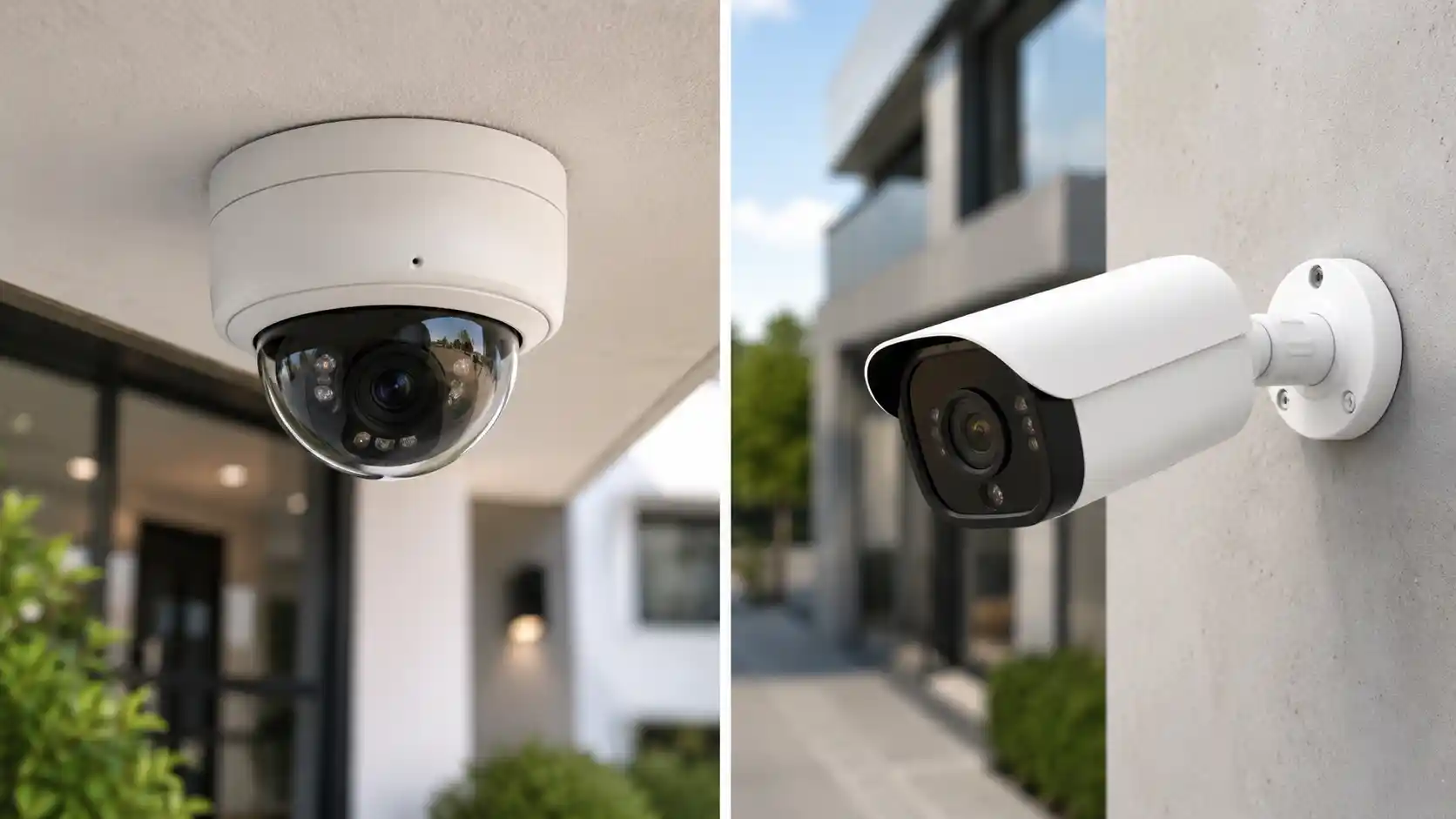
A dome camera is a compact, rounded unit usually mounted on a ceiling. Its lens sits inside a smoked or tinted dome cover, which makes it difficult for people to tell exactly where the camera is pointing. This design works well in spaces where you want surveillance without drawing attention to it.
Dome cameras typically offer a wide field of view, which makes them useful for covering open indoor areas such as lobbies, retail floors, and corridors in a single shot. Many dome models also come in vandal-resistant versions rated IK10, meaning the housing can absorb a direct hit without the camera being disabled. This makes them a practical choice for areas where tampering is a concern, such as stairwells or public-facing counters.
What Is a Bullet CCTV Camera?
A bullet camera is a cylindrical unit, usually mounted on a wall using a bracket, with the lens visible at one end. Unlike a dome, a bullet camera is meant to be seen. The visible housing acts as a deterrent on its own, since anyone looking at the property knows exactly where a camera is pointing.
Bullet cameras are built for distance. Their lens design allows for longer focal lengths and, in many cases, varifocal or zoom lenses that can be adjusted after installation. This makes them a common choice for covering driveways, parking areas, and property perimeters, where you need to identify a face or a license plate from several meters away rather than monitor a wide indoor space.
Dome vs Bullet Camera: Key Differences
| Feature | Dome Camera | Bullet Camera |
|---|---|---|
| Design | Compact, rounded housing | Cylindrical, elongated housing |
| Mounting | Ceiling | Wall |
| Discretion | High blends into the ceiling | Low visible and obvious |
| Field of view | Wide-angle | Narrow, focused |
| Typical range | Short to medium | Medium to long |
| Vandal resistance | High (IK10 options available) | Moderate, depends on housing |
| Best location | Indoors | Outdoors |
| Zoom/varifocal options | Limited on most models | Common on mid to premium models |
Design and Aesthetics
A dome camera is built to disappear into its surroundings. Its low profile and tinted cover mean it does not stand out against a ceiling, which is why offices, retail stores, and hotels often prefer it for interior monitoring. People are aware cameras exist but cannot easily tell which direction one is facing, which works in favor of constant, low-friction surveillance.
A bullet camera takes the opposite approach. Its visible shape signals “you are being recorded” the moment someone sees it. For entrances, gates, and perimeters, this visibility is an advantage rather than a drawback, since the goal there is often deterrence as much as recording.
Field of View and Range
Field of view and range are where the two designs diverge the most. A dome camera’s lens is usually fixed or has a moderate zoom range, and its strength lies in covering a wide area from one mounting point, useful for a reception desk, a small warehouse floor, or a hallway intersection.
A bullet camera is built for the opposite job. Its longer lens housing supports better optical zoom, so it can capture clear detail at greater distances. If you need to read a number plate at the gate or identify a person walking up a long driveway, a bullet camera with a varifocal lens will outperform most dome models at the same price point.
Weatherproofing and Durability
Outdoor installations need to survive heat, dust, and occasional rain, which in the UAE means an IP65 or IP66 rating is the minimum standard worth asking for, regardless of camera type. Most outdoor-rated bullet cameras come with sealed housings designed for exactly this kind of exposure, since they are built for perimeter use by default.
Dome cameras also come in outdoor-rated versions, and the rounded housing sheds water and dust effectively. Where dome cameras have an edge is vandal resistance an IK10-rated dome can withstand impact without losing function, which matters in areas accessible to the public, such as stairwells, parking garages, or shop entrances at street level.
Night Vision and Low-Light Performance
Both camera types support infrared (IR) night vision, but the achievable range differs because of housing size and lens design. Dome cameras typically deliver IR coverage in the 20–30-meter range, which is enough for most indoor and close-range outdoor use, such as porches or small yards.
Bullet cameras, with their longer body and larger IR arrays, often reach 30–50 meters or more on mid-range and premium models. For a property with a long driveway, a back perimeter wall, or a warehouse yard, this extended night-vision range is a meaningful advantage over a dome camera in the same price bracket.
Installation and Maintenance
Dome cameras mount flush against a ceiling, which keeps cabling tidy and the unit close to the surface, reducing the chances of someone tampering with the angle. This also makes them slightly more complex to install in spaces without a finished ceiling or accessible cable routing.
Bullet cameras mount on a wall bracket, which makes installation and angle adjustment more straightforward, since the technician can see and reach the unit directly. The trade-off is that the visible mounting and external bracket may be more exposed to manual interference if installed within arm’s reach of the ground.
Cost Comparison
Pricing depends on resolution, lens type, and brand, but as a general guide for camera units alone (excluding installation, cabling, and NVR):
| Tier | Dome Camera (AED) | Bullet Camera (AED) |
|---|---|---|
| Budget (2–4MP) | 150 – 300 | 180 – 350 |
| Mid-range (4–8MP) | 350 – 700 | 400 – 800 |
| Premium (8MP+, varifocal) | 800 – 1,500+ | 900 – 1,800+ |
Bullet cameras tend to sit slightly higher in price at each tier because of their lens and IR hardware, but the gap narrows at the budget end and widens at the premium end where zoom and resolution matter most.
Which One Should You Choose?
The right camera depends on what you are protecting and where.
| Scenario | Recommended Camera |
|---|---|
| Retail store interior | Dome |
| Villa main gate or entrance | Bullet |
| Warehouse perimeter | Bullet |
| Office reception | Dome |
| Parking lot | Bullet |
| Hallway or corridor | Dome |
As a simple rule: choose dome for indoor spaces where wide coverage and discretion matter, and bullet for outdoor spaces where range, visibility, and deterrence matter more than blending in.
Can You Use Both Together?
Most properties don’t need to choose just one type they need both, applied to the right zones. A common and effective setup uses dome cameras indoors for reception areas, hallways, and sales floors, paired with bullet cameras outdoors for gates, parking areas, and perimeter walls. This combination covers both detailed indoor monitoring and long-range outdoor deterrence without compromising on either.
SIRA Compliance for CCTV in Dubai
Any CCTV system installed in Dubai, whether dome, bullet, or a mix of both, should comply with Dubai Police’s Security Industry Regulatory Agency (SIRA) requirements. This applies to the equipment used and how the system is installed and configured, so it’s worth confirming SIRA compliance before finalizing any installation, regardless of which camera type you choose.
Final Thoughts
Dome and bullet cameras solve the same problem, visibility and recorded evidence, in two different ways. Dome cameras work best where discretion and wide indoor coverage matter. Bullet cameras work best where range, weatherproofing, and visible deterrence are the priority. Most well-protected properties end up using both, placed according to what each space actually needs.
If you’re unsure which combination fits your property, Wiznet offers a free site survey across Dubai to assess your space and recommend a SIRA-compliant CCTV setup tailored to your budget.
FAQs
Which lasts longer outdoors, dome or bullet?
Both can be built for outdoor use with proper IP-rated housings. Dome cameras typically offer better vandal resistance, while bullet cameras handle long-term exposure to direct weather slightly better due to their sealed cylindrical design.
Can dome cameras be used outdoors?
Yes, outdoor-rated dome cameras exist and work well for covered entrances, porches, and building exteriors, though they generally have a shorter range than bullet cameras.
Which camera has better zoom?
Bullet cameras generally offer better zoom and varifocal options, especially at the mid-range and premium price tiers.
Is one cheaper than the other?
At the budget tier, prices are close. At mid and premium tiers, bullet cameras tend to cost slightly more due to their lens and IR hardware.

Junaid Farooq
A technology specialist with a focus on IT infrastructure and security solutions. Shares expert advice on topics like access control, CCTV, and smart solutions to help businesses across the UAE build smarter, more secure systems.
